Chapter Two
What a Jesuit School and Albert Camus Taught Me About Living
June 2026
·
Santa Clara, CA
·
By Hieu Bui
I did not expect a required religion course at a Jesuit university to be the class that changed how I think. I signed up for RSOC 56, The Meaning of Life, mostly because it was a graduation requirement. I had no particular expectations going in. What I got was one of the more genuinely useful intellectual experiences of my time at Santa Clara University.
The course was not trying to convert anyone. It was trying to do something harder — to sit with the question of what makes a life meaningful and take seriously the different answers that human beings have given across centuries and cultures. We read religious texts, philosophers, and thinkers who disagreed with each other in fundamental ways. For the first time, I was not being asked to accept an answer. I was being asked to think.
I
The Unexpected Door
The class introduced me to Nietzsche first. His critique of inherited morality, the idea that most people live by values they never chose and never questioned, landed differently for me than it might have for someone whose life had followed a more expected path. I had left Vietnam at 14, moved to a country where I had to build almost everything from scratch. In a way, I had already been doing what Nietzsche was describing. I just had not known there was a name for it.
Nietzsche led me to Camus. They share a starting point: the world does not come with a built-in instruction manual, and the answers most people reach for, whether religious certainty or blind optimism, are ways of avoiding that reality rather than facing it. But where Nietzsche can feel combative, Camus felt honest in a quieter way. He was not asking me to fight anything. He was asking me to look clearly at what is actually in front of me.
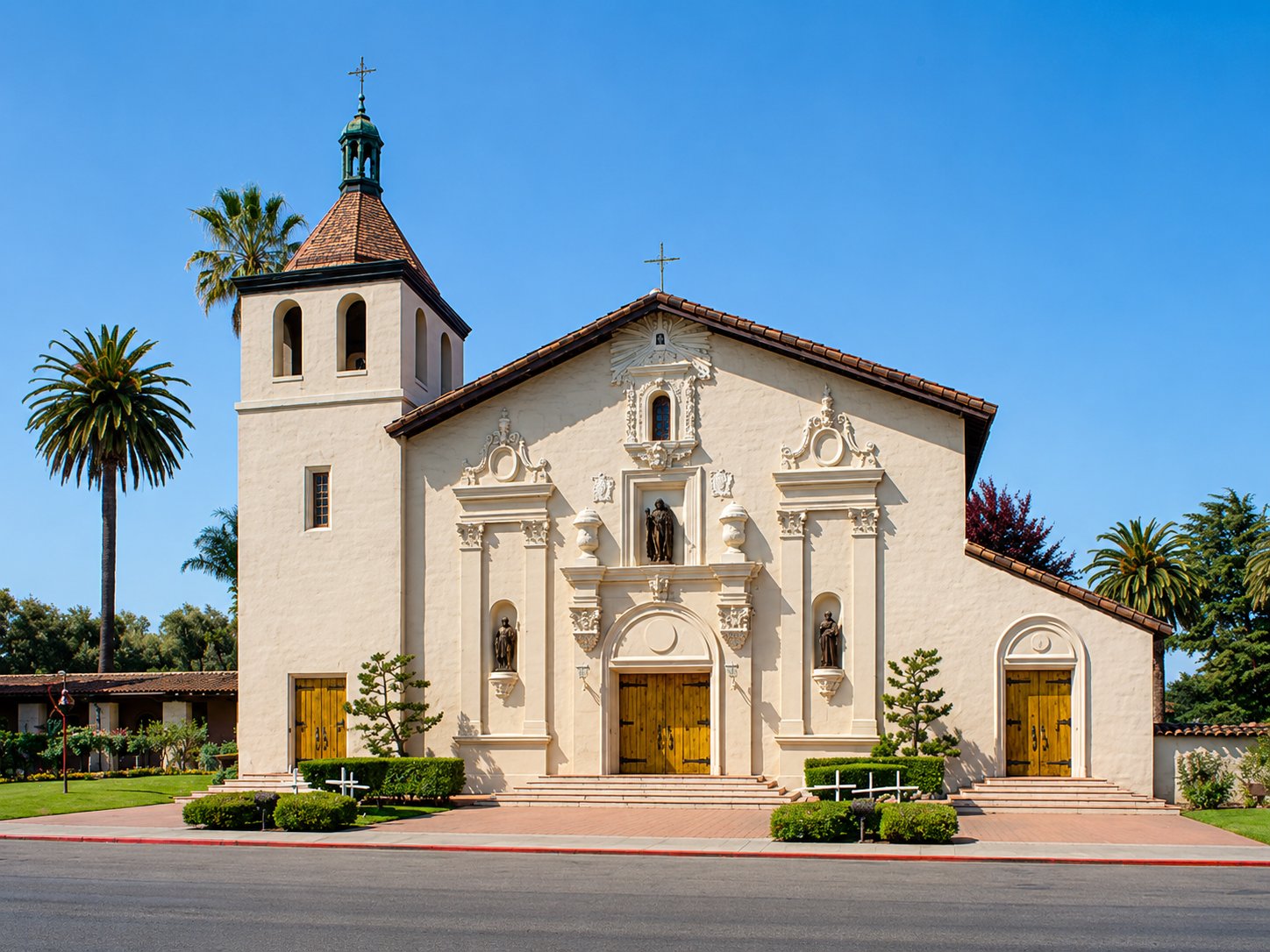
The Santa Clara University Mission Church — where a required course opened an unexpected door.
II
The Absurd, and Why It Made Sense to Me
Camus begins The Myth of Sisyphus with a provocation: the only serious philosophical question is whether life is worth living. He is not being dramatic. He is being precise. If the universe offers no inherent meaning, no guaranteed reward, no cosmic assurance that any of it matters, then why continue? His answer is what he calls the absurd. The tension between our deep human need for meaning and the universe's complete silence on the subject. The absurd is not something to solve. It is something to live with, honestly and without flinching.
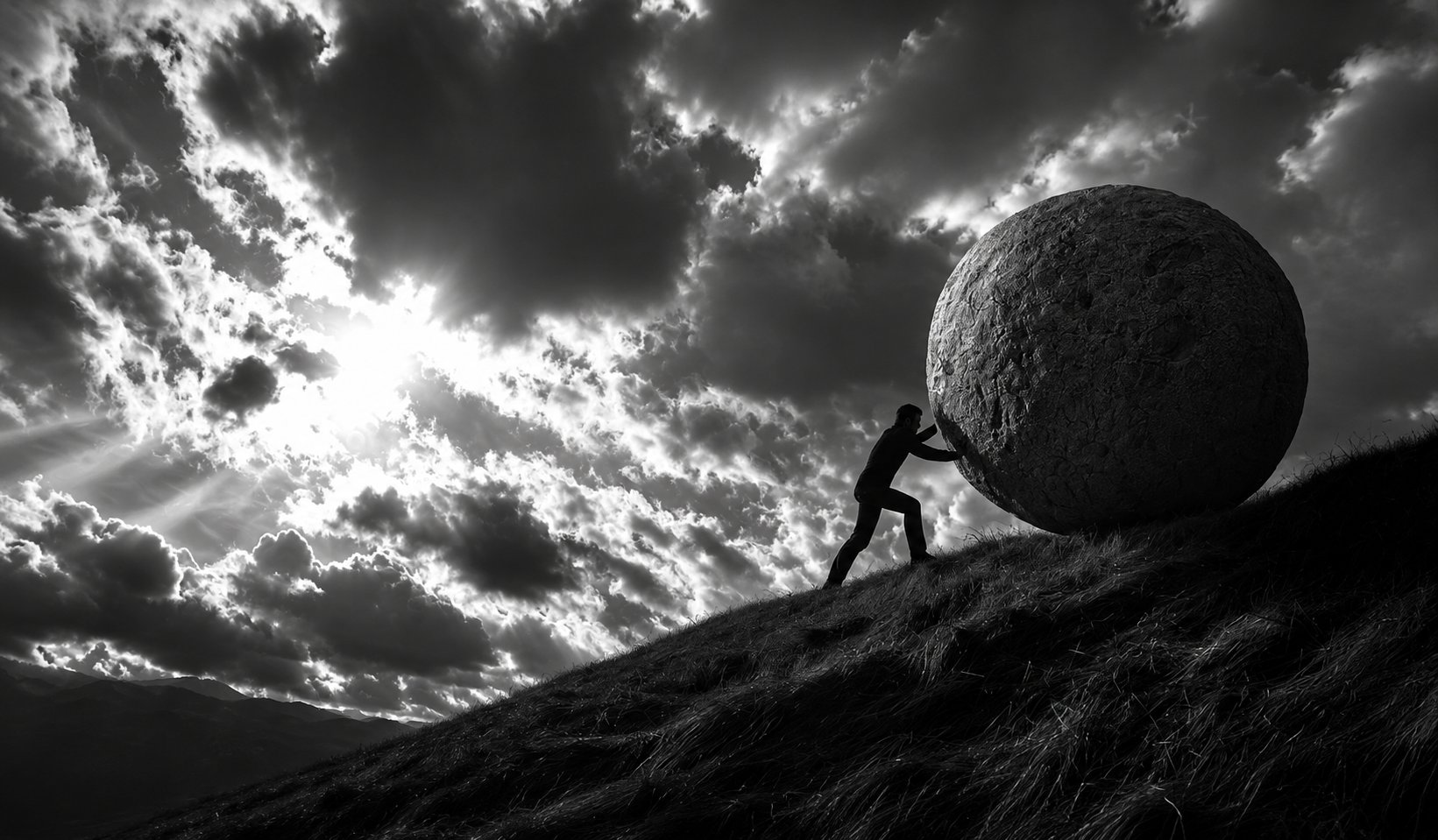
Sisyphus, condemned by the gods to roll a boulder up a hill for eternity only to watch it roll back down each time, is Camus's image of the human condition. Most people read that as a story about futility. Camus reads it differently. Sisyphus knows exactly what he is doing. He has no illusions about the outcome. And he pushes anyway. That act of continuing, fully aware and undeceived, is where Camus locates something that looks like dignity.
"The struggle itself toward the heights is enough to fill a man's heart. One must imagine Sisyphus happy."
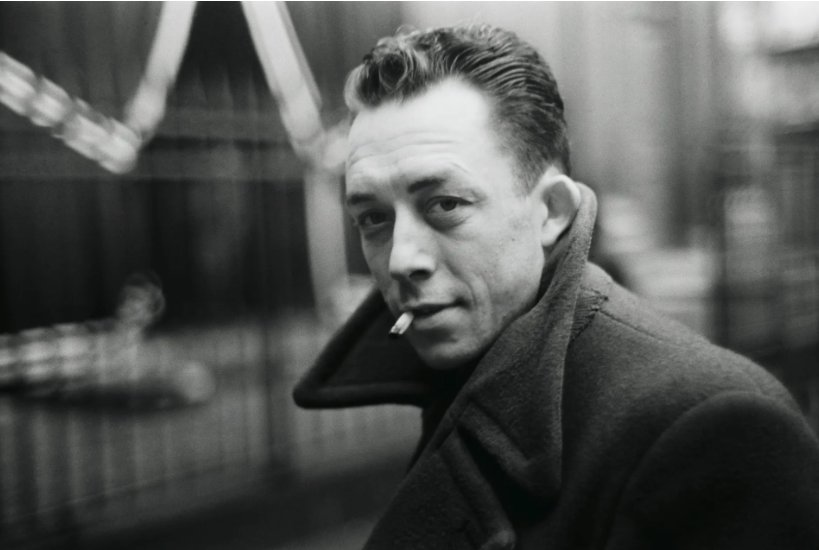
Albert Camus, whose answer to meaninglessness was not despair but defiant engagement.
III
Pushing My Own Boulder
I am not naturally gifted at the subjects I have chosen to study. Mathematics, statistics, machine learning — none of these came easily to me. There were many moments in my coursework where I could not see the path forward, where I genuinely did not know if I was capable of understanding what was being asked of me. That feeling is uncomfortable in a way that is hard to describe to someone who has not sat with a problem for hours and felt nothing click.
But something else happens in those moments, if you stay with them long enough. When I finally work through a problem on my own, when something that was opaque becomes clear through my own effort, there is a satisfaction in that which has nothing to do with the grade or the outcome. It is the satisfaction of the process itself. I did not know how to articulate that feeling until I read Camus. He gave me the vocabulary for something I had already been experiencing.
This is what I take from The Myth of Sisyphus. Not a reason to stop caring about outcomes, but a different relationship with difficulty. The hard subject is the boulder. The semester is the hill. I am going to push it to the top and watch it come back down, and then I am going to push it again. That is not a tragedy. That is what learning actually looks like from the inside.
"I don't study hard subjects because I am good at them. I study them because the struggle is where I feel most alive."
I am grateful for that religion class in a way I did not anticipate. It was not trying to give me answers. It was trying to make me comfortable sitting with hard questions. That is a more useful skill than any specific answer it could have handed me. Santa Clara University, for all its Jesuit roots, gave me the intellectual permission to think for myself. I do not think that was an accident.
Camus did not make life easier. He made it clearer. The absurd is real. The boulder is heavy. The hill does not get shorter. But on the way up, if you are paying attention, there is something that feels a lot like meaning. I am still learning to find it. I think that is the whole point.